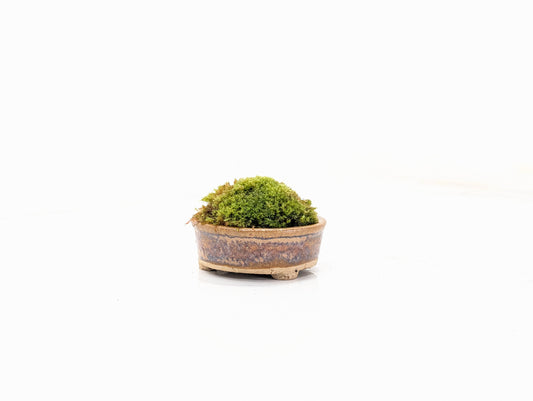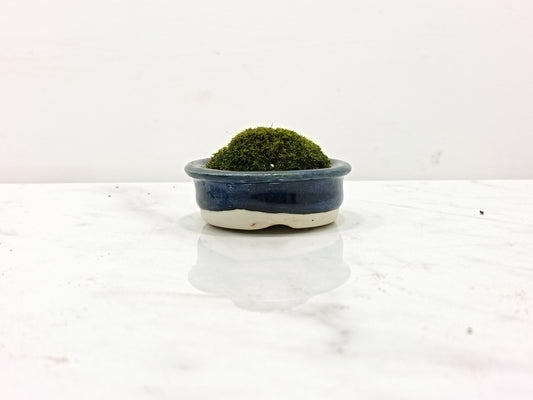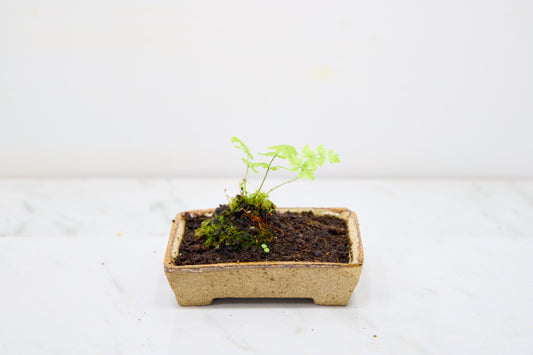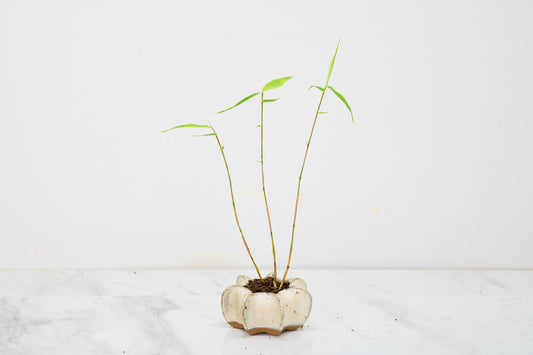

In traditional Japanese bonsai exhibitions, a display is a living landscape. To evoke the true feeling of a vast, ancient forest or a quiet mountain peak, artists rely on Kusamono—accent plant arrangements that accompany the main tree.
While wildflowers bring color and ferns bring structure, simple moss brings a sense of profound age and stillness. Often overlooked as a mere soil cover, moss can be elevated into a captivating, minimalist Kusamono all on its own, grounding the display with an understated, velvety elegance.
The Power of the Minimalist Accent
In Kusamono design, moss is the ultimate expression of wabi-sabi—the beauty of imperfection and simplicity. It serves several artistic and practical purposes:
-
Imparting Mochikomi: This Japanese term refers to the impression of "time gained" or age. A lush, well-established cushion of moss instantly makes a display look as though it has been sitting undisturbed in nature for decades.
-
Scale and Horizon: Because moss mimics a rolling green lawn or a distant forest canopy in miniature, it creates a powerful sense of scale, making the accompanying bonsai look massive and majestic by comparison.
-
Moisture Retention: Practically, a dense layer of moss acts as a natural blanket, protecting the shallow roots of the Kusamono display from drying out too quickly under display lights.
Choosing Your Moss
Not all mosses are created equal. For Kusamono, you want species that form tight, distinct cushions rather than invasive, stringy mats.
| Moss Type | Visual Character | Best Display Role |
| Cushion/Pincushion Moss (Leucobryum) | Dense, rounded, velvety mounds; pale green to silvery-green. | Excellent for standalone "island" displays in flat, shallow trays. |
| Haircap Moss (Polytrichum) | Looks like miniature pine tree seedlings; upright and structured. | Adds vertical texture; great when paired with a tiny wild grass. |
| Carpet/Fern Moss (Thuidium) | Delicate, feathery fronds that creep tightly over rocks or soil. | Ideal for draping over the edges of a rustic, handmade ceramic pot. |
Styling and Cultivation Secrets
Creating a moss Kusamono is an exercise in restraint. The goal is to highlight the natural contour of the moss rather than forcing it into a shape.
-
The Right Foundation: Use a sticky soil mix that holds its shape, such as a blend of fine akadama and keto-tsuchi (Japanese peat clay). This allows you to sculpt mounds that won't wash away.
-
Watering and Light: Moss thrives on humidity and airflow, but hates stagnant water. Mist it daily with pure or rainwater (tap water minerals can turn moss brown) and keep it in dappled shade.
-
The "Dirty" Secret: To quickly establish a seamless look, use the slurry method. Blend dried moss with a little buttermilk or water, paint it onto your soil mound, and keep it enclosed in a humid propagator until a vibrant green carpet emerges.
By giving simple moss the center stage in a Kusamono, you invite viewers to slow down, look closer, and appreciate the quiet grandeur of nature’s smallest details.