
Autumn is the turning point in the bonsai year. Growth slows as temperatures fall, and the tree shifts its attention below ground, thickening roots and storing energy for spring. What you do over the next few weeks decides how well an outdoor tree comes through winter.
General autumn care
Feeding. Move to a feed that is low in nitrogen with more phosphorus and potassium in early autumn. This hardens off the season's new wood and builds root strength. Stop altogether once your broadleaf trees have dropped their leaves.
Watering. Cut back the frequency. Soil stays wet far longer in cool, damp weather. Never let the root ball dry out completely though, even in November.
Hygiene. Sweep fallen leaves and debris off the soil surface. Left sitting there it shelters fungal spores and gives pests somewhere to overwinter.
Species by species
Conifers and evergreens
Japanese black pine and Japanese white pine. Late autumn is the time for needle plucking. Pull the old needles from the previous two or three seasons so light and air can reach the inner canopy. Black pines take structural wiring and branch selection well at this point. White pines resent heavy bending in cold weather, so keep any wiring light.
Scots pine and mugo pine. Clear the dead interior needles before they start to rot. Both species respond well to autumn wiring and small adjustments to branch position once sap flow has slowed.
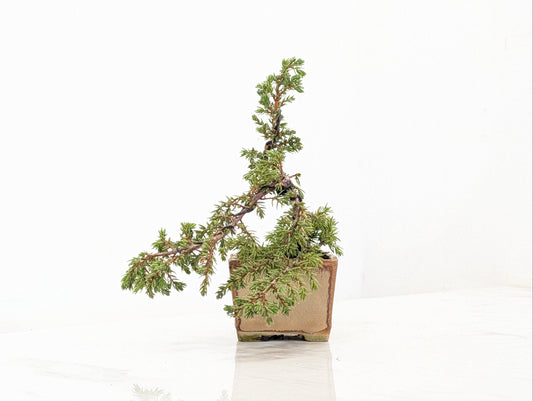
Juniper. Pull the yellowed scale leaves out from deep inside the foliage pads. Late autumn suits detail wiring and jin or shari refinement, provided the tree goes somewhere sheltered before hard frost arrives.
Deciduous and broadleaf
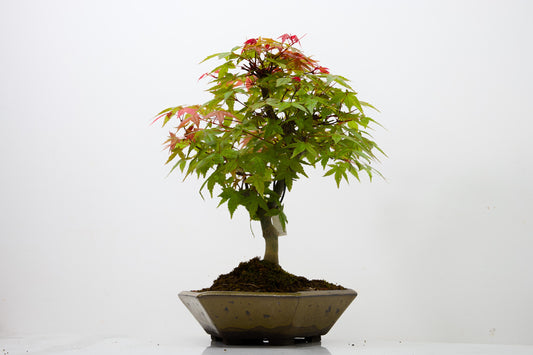
Japanese maple and field maple. Leave heavy pruning until the leaves have dropped on their own. Once the tree is bare you can read the branch structure properly, so take out unwanted shoots and any heavy branches, sealing the wounds as you go. Field maple is tough and shrugs most things off. Japanese maple needs shelter from wind if you want the autumn colour to last.
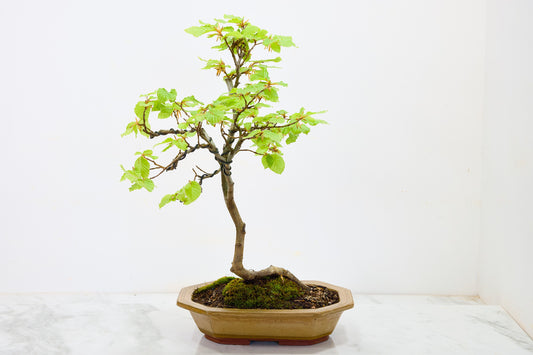
Hornbeam. Hornbeams tend to hang onto dead leaves well into winter. Once they have gone fully brown, pull them off gently by hand so you can inspect the fine ramification underneath. Trim extension shoots back to one or two buds to hold the silhouette.
Dawn redwood. A deciduous conifer, so the foliage turns bronze and gold before it falls. Let it drop naturally. Prune out dead or unwanted branches in late autumn once the tree is bare. Keep the soil moist but freely draining.
Getting ready for winter
Have your winter shelter sorted by late autumn: a cold frame, an unheated greenhouse, or a sheltered bed where pots can be sunk into the ground. Japanese maples and dawn redwoods suffer more from drying winter wind than from cold itself, so get them out of it before the first hard freeze.